
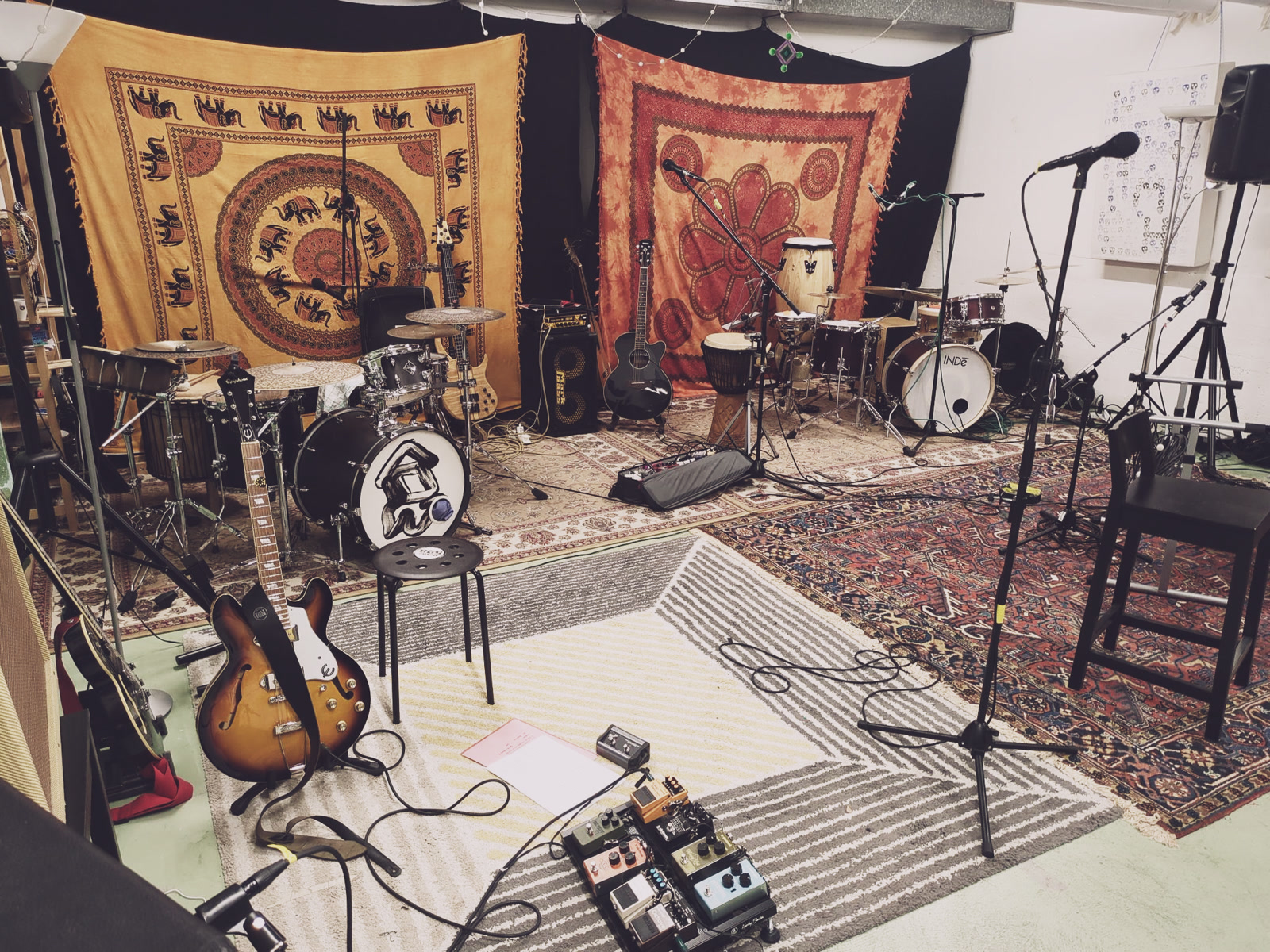
Multitrack is the goal
A single stereo recording from a room mic captures everything at once. That's fine for reference, but you can't fix anything in the mix. If the guitar was too loud, it's too loud forever.
Multitrack means recording each source to its own track: kick, snare, bass DI, guitar amp, vocals. Each one is a separate file. That's what makes real mixing possible.
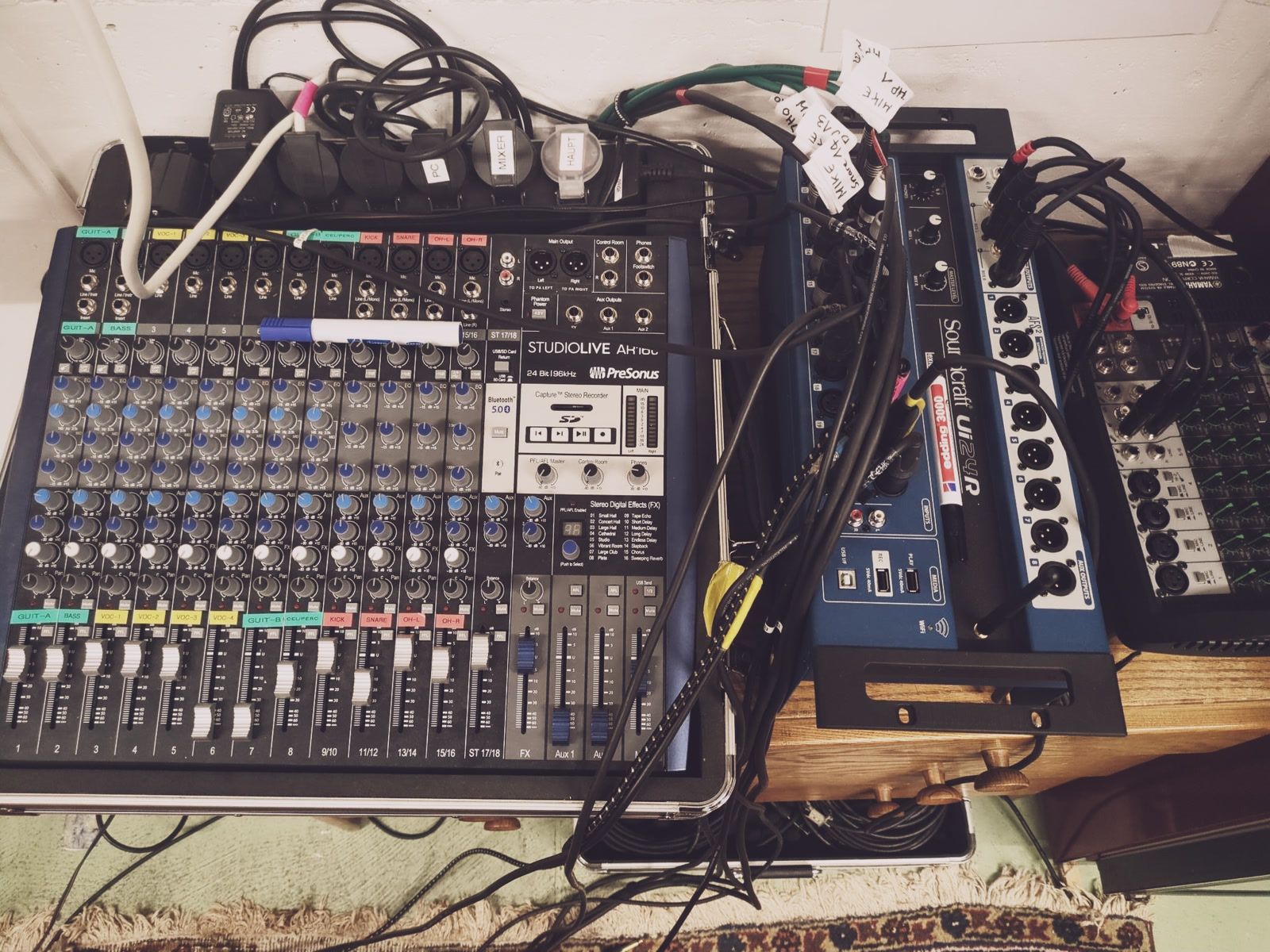
You don't need a fancy studio setup for this. An 8-channel USB interface and a handful of microphones gets you there. Focusrite, PreSonus, and Behringer all make affordable interfaces with enough inputs for a typical band.
The minimum viable setup
For a 4-piece rock band, this gets you surprisingly good results:
- Kick drum: One mic inside or just outside the sound hole
- Snare: One mic pointed at the top of the snare
- Overheads: One or two mics above the kit to catch cymbals and overall drum tone
- Bass: Direct input (DI) from the bass amp or a DI box. This is the cleanest, most reliable way to capture bass
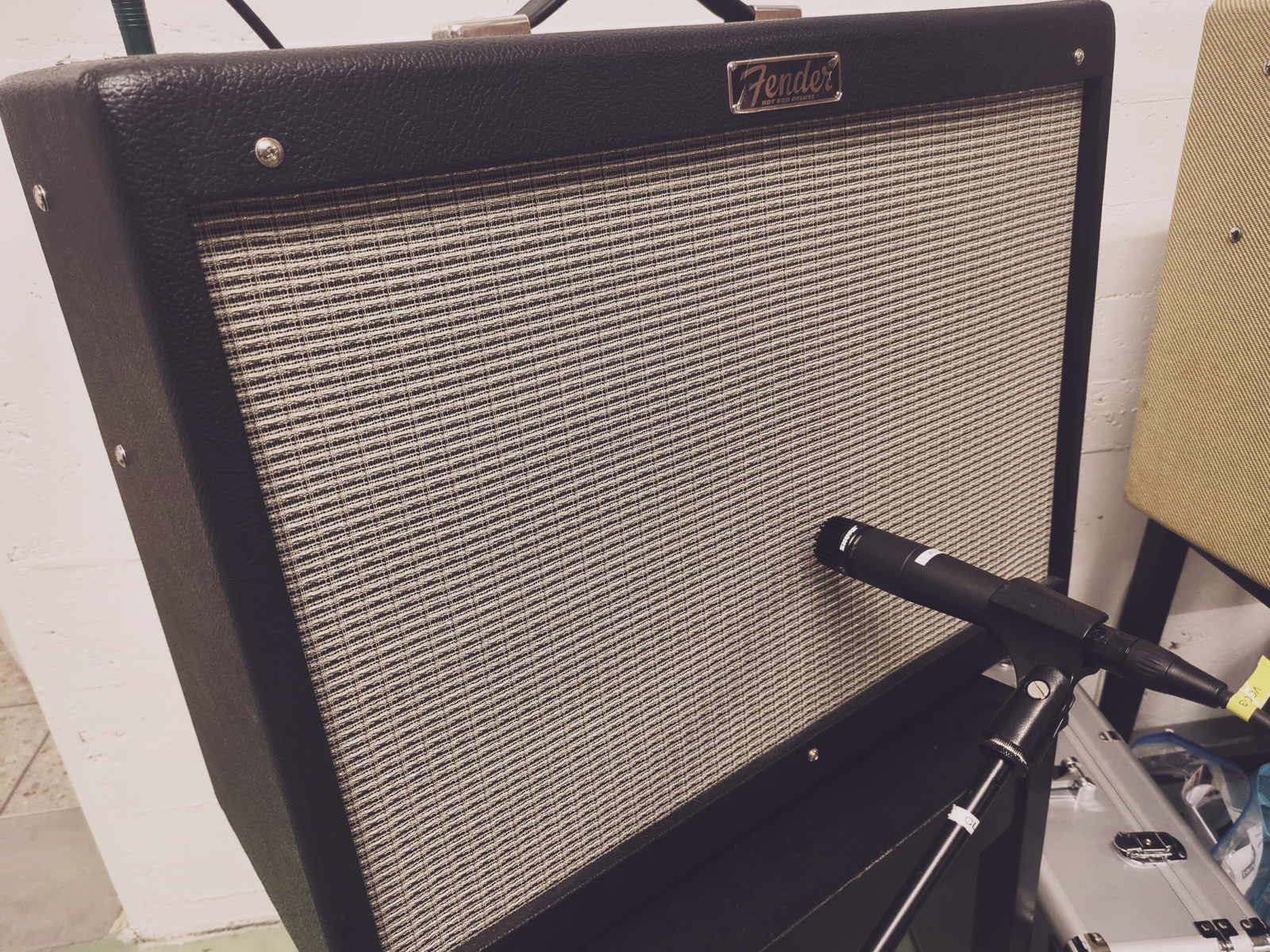
- Guitar(s): One mic on each amp, close to the speaker cone
- Vocals: A dynamic mic (SM58 or equivalent) on each vocalist
That's 7 or 8 channels. Well within the range of a mid-range interface.
If you only have 4 inputs, prioritize: drum overhead (one mic), bass DI, guitar mic, vocal mic. You lose some drum detail, but you still get separated instruments.
Mic placement tips
Close-mic everything. The closer the mic is to the source, the less room sound and bleed you pick up. Bleed (other instruments leaking into a mic) is the enemy of a clean mix.
Point mics away from other sources. A vocal mic facing the drum kit will pick up a lot of drums. Angle it so the back of the mic (the rejection side) faces the loudest nearby source.
Use the 3:1 rule for multiple mics on the same source. If your close mic is 6 inches from the snare, the next mic should be at least 18 inches away. This reduces phase cancellation.
Bass: go DI whenever possible. A direct input signal from the bass is clean, consistent, and has zero room bleed. If you want the amp sound too, record both: DI on one channel, mic on another.
Gain staging at the source
Set your preamp levels so the loudest moments peak around -12 to -6 dB in your DAW. This leaves headroom for mixing. If the drummer hits hard during the bridge and the overheads clip, that distortion is baked in permanently.
It's better to record too quiet than too loud. A quiet recording can be boosted. A clipped recording is damaged.
Check levels during the loudest part of the loudest song before you start the real recording.
Room acoustics (the unsexy truth)
Rehearsal rooms are usually terrible acoustic environments. Concrete walls, low ceilings, no treatment. Sound bounces everywhere.
You can't fix the room, but you can minimize its impact:
- Close-mic everything (less room, more source)
- Use dynamic mics (SM57, SM58) instead of condensers for loud sources. Dynamics have tighter pickup patterns and reject more off-axis sound
- If possible, put the amps facing walls with some absorption (even a blanket draped over a chair behind the amp helps)
- Vocals: the singer should cup the mic close and sing directly into it
The recording session itself
Run a sound check before you actually start playing. Then record a few bars of the loudest song at full energy to check levels.
Once everything looks good, hit record and leave it running for the whole session. Don't start and stop between songs. You can split individual songs out later (Bandmixr's Rehearsal Cutter does this automatically for Pro users).
Label your tracks clearly in your DAW before exporting. "Track 1" and "Track 2" don't help anyone. "kick.wav", "snare.wav", "bass_di.wav", "guitar_rhythm.wav" save time and let Bandmixr auto-detect instruments.
What "mixable" actually means
You don't need perfect recordings. You need separated recordings. If each instrument is on its own track with reasonable levels and no clipping, a mix engine (or a human engineer) can do its job.
The bar is lower than you think. Invest an hour into your setup before the next rehearsal, and you'll have stems that are genuinely ready for mixing.