
There is a specific moment every self-releasing musician knows. The track is bounced, the artwork is done, the distributor tab is open. And then the doubt: is it actually loud enough? Will the bass fall apart on a phone? Is that one cymbal going to distort on Spotify?
You can answer all of that in about a minute. The Bandmixr Mix Analyzer is free, needs no account, and runs entirely in your browser. Drop in your file and it measures the same things a mastering engineer checks before sign-off: loudness, true peak, clipping, mono compatibility, stereo width, dynamics, and tonal balance. Your audio never leaves your device.
The five numbers that decide how your release sounds
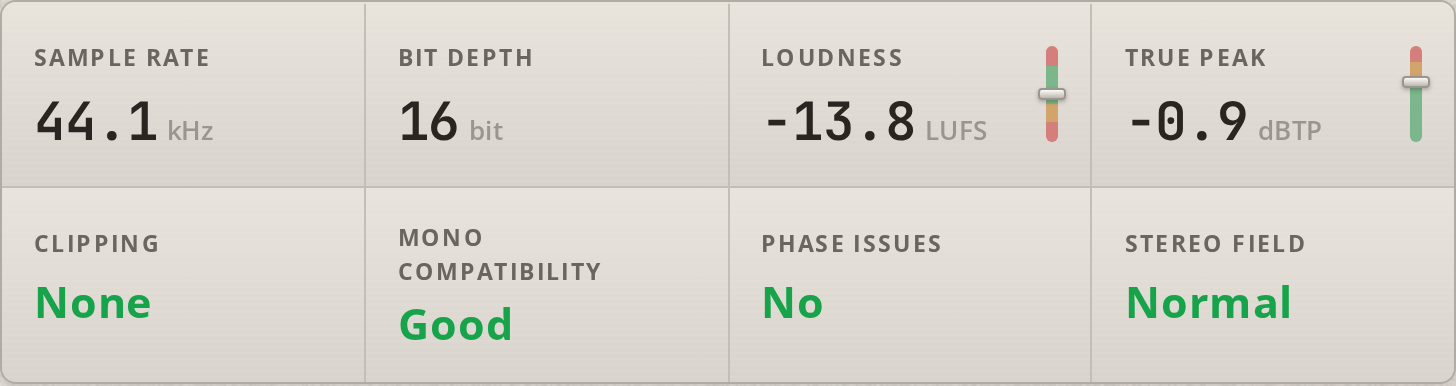
Loudness (LUFS). Spotify and YouTube play everything at about -14 LUFS, Apple Music at about -16. Master far above that and the platforms simply turn you down, keeping the squash and throwing away the loudness. Master far below and your track sits small next to everything else in the playlist. The analyzer tells you where you are and, if you are loud, exactly how many dB the platforms will pull you down.
True peak. Your DAW can say the file never touches 0 dB while the actual waveform between samples goes over. Those inter-sample peaks turn into distortion when streaming services convert your track to AAC. The common delivery standard is -1 dBTP, and this is the check most home masters fail without anyone hearing it until it is live.
Clipping. Flat-topped waveforms baked into the file. No mastering service can repair this afterwards, which is why it is worth catching while you can still re-export.
Mono compatibility. Phone speakers, Bluetooth boxes, and club systems are mono or close to it. If your left and right channels cancel, parts of your mix disappear on exactly the systems most people use. The analyzer checks every frequency range and every section of the song separately, because cancellation likes to hide in one synth or one chorus.
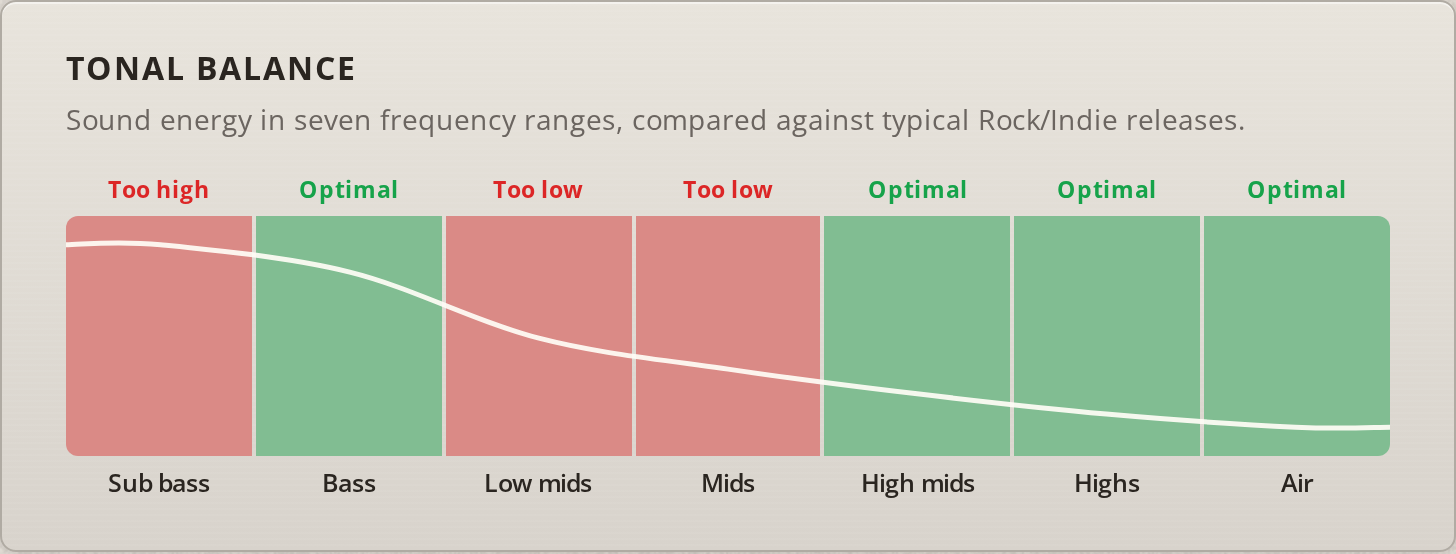
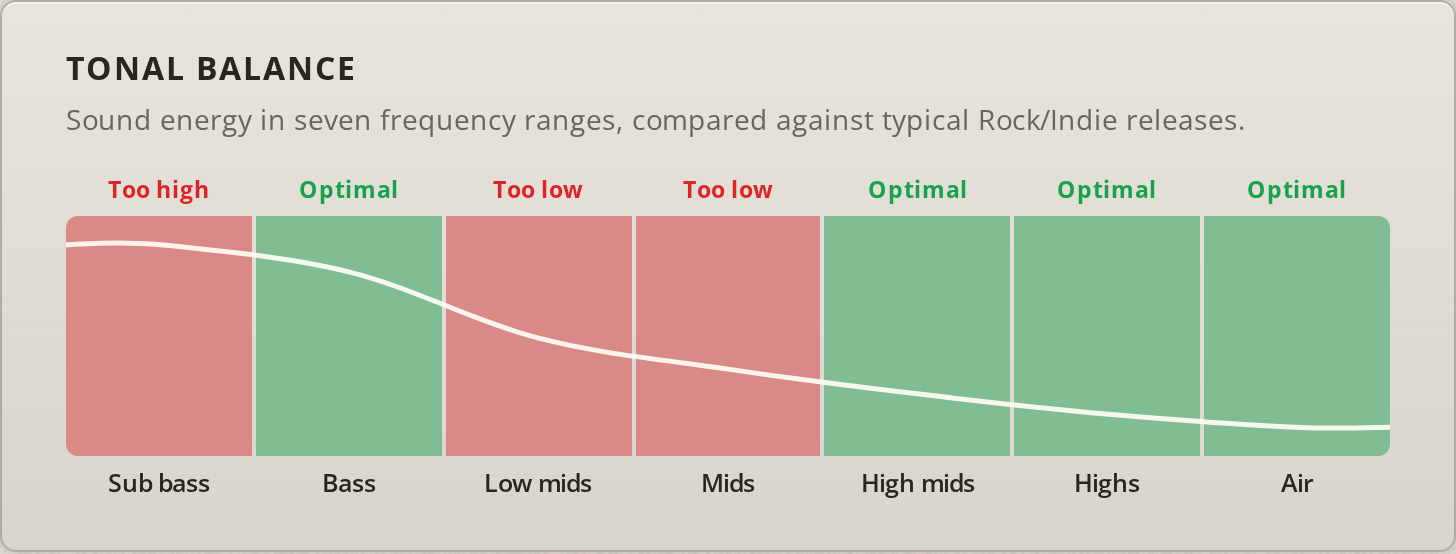
Tonal balance. Seven frequency ranges compared against typical releases in your genre, because a healthy bass level for hip hop is a problem for acoustic folk. You see at a glance whether your track leans dark, bright, or sits where finished records sit.
We calibrated it on records you know
A mix checker is only useful if it stays calm on great masters. So we ran commercial classics through it during development. If a tool tells you Dark Side of the Moon has mono problems, the tool is wrong, not the record. Some analyzers out there fail exactly that test. Ours had to pass it before we shipped.
Mix or master, it judges accordingly
Tell it what you uploaded. An unmastered mix gets checked for headroom and mix problems, because loudness comes later. A finished master gets checked against streaming delivery standards. Same measurements, different rules, which is the difference between useful feedback and noise.
And if the report finds things a mastering pass fixes, one click sends the track into Bandmixr and masters it. If the problems live in the mix itself, upload your stems and Bandmixr mixes and masters them together. Either way you know before release, not after.
Check your mix now. It is free, and the doubt is worse than the answer.