
What panning actually is
Every stereo playback system has two channels: left and right. Panning controls how much of a signal goes to each channel. Hard left means the sound only comes from the left speaker. Hard right, only the right. Center means equal amounts in both.
By spreading instruments across this left-right field, you create width, separation, and clarity. A mix where everything sits in the center sounds narrow and cramped. A mix with thoughtful panning sounds open and spacious.
The fundamentals
Some rules apply to almost every genre:
Bass and kick: center. Low frequencies are non-directional. Your ears can't tell where a sub-bass rumble comes from. Panning bass or kick to one side creates an unbalanced mix that feels lopsided, especially on headphones.
Lead vocals: center. The vocal is usually the most important element. It lives dead center so it has equal presence in both speakers.
Snare and main percussion: center or nearly center. The snare anchors the rhythm alongside the kick. Keep it centered.
Overheads and hi-hats: slightly wide. These add shimmer and air. Panning them moderately left and right creates width without pulling attention away from the center.
Guitars: spread them. If you have two guitars, pan one left and one right. How far depends on the genre. Rock and metal tend to go hard left/right for wall-of-sound width. Acoustic and jazz might be more subtle, maybe 30-50% to each side.
Keys and pads: fill the gaps. If guitars are taking the sides, keys might sit just off-center. Synth pads can go wide for ambiance.
Backing vocals: wide. Harmonies and backing parts panned left and right create a sense of depth and ensemble around the centered lead vocal.
Common panning approaches
LCR (Left, Center, Right): Everything goes hard left, dead center, or hard right. Nothing in between. This creates a bold, punchy stereo image. Common in rock and pop. Simple and effective.
Naturalistic: Pan instruments where they'd sit on a stage. Drums from audience or drummer perspective, guitars on their respective sides. Creates a realistic, live feel.
Frequency-aware: Pan instruments based on their frequency content rather than stage position. If two instruments occupy similar frequencies, push them to opposite sides so they don't fight each other.
Mistakes to avoid
Panning bass to one side. It'll sound lopsided on every system.
Making everything wide. If everything is panned hard left and right, the center feels empty and the mix loses focus. You need anchor points in the center (kick, bass, vocal, snare).
Ignoring mono compatibility. Lots of speakers in the real world are effectively mono: phone speakers, cheap Bluetooth speakers, PA systems. If your panning relies on hard stereo tricks (like heavy Haas effect), check that it doesn't fall apart in mono.
Panning just to fill space. Every panning decision should serve the song. Don't pan something just because you feel like the right side is "empty." If the arrangement doesn't call for width there, leave it.
How Bandmixr handles panning
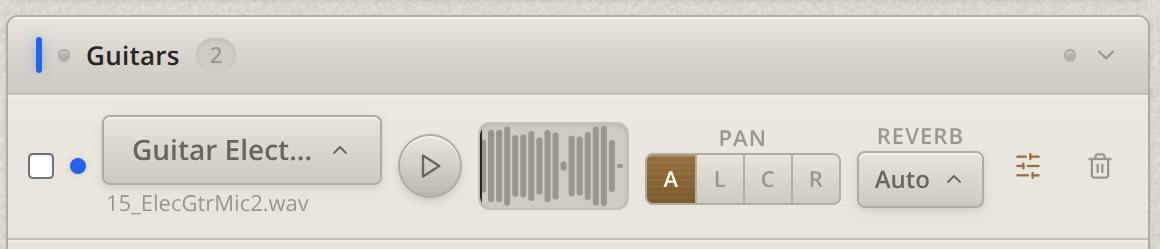
Bandmixr auto-pans instruments based on their type and what else is in the mix. Kick, bass, and vocals go center. Guitars spread to opposite sides. Overheads get moderate width. The engine also looks at the full arrangement to avoid conflicts: if two instruments share a frequency range, it pushes them to opposite sides.
You can override any of these decisions. Each stem has a pan control (auto, left, center, right) that takes priority over the automatic placement.
Panning isn't glamorous, but it's one of the biggest factors in whether a mix sounds professional or amateur. Get it right and everything breathes. Get it wrong and even great recordings sound flat.